1-Month Muay Thai Camp in Thailand: What to Expect & How to Book
A month is the sweet spot for training Muay Thai in Thailand — long enough to actually change, short enough to survive on a visa-exempt entry. Here's what it really gets you, roughly what it costs in 2026, and how to book without overthinking it.
On this page
A month is, honestly, the best first dose of Thailand there is. Long enough that your body actually adapts — your shins stop screaming, your gas tank grows, your technique starts to look less like flailing. Short enough that you can do it on a standard 30-day visa-exempt entry without any paperwork drama. Most people who go for two weeks come home wishing they'd stayed longer. Very few people come home from a month wishing they'd gone shorter.
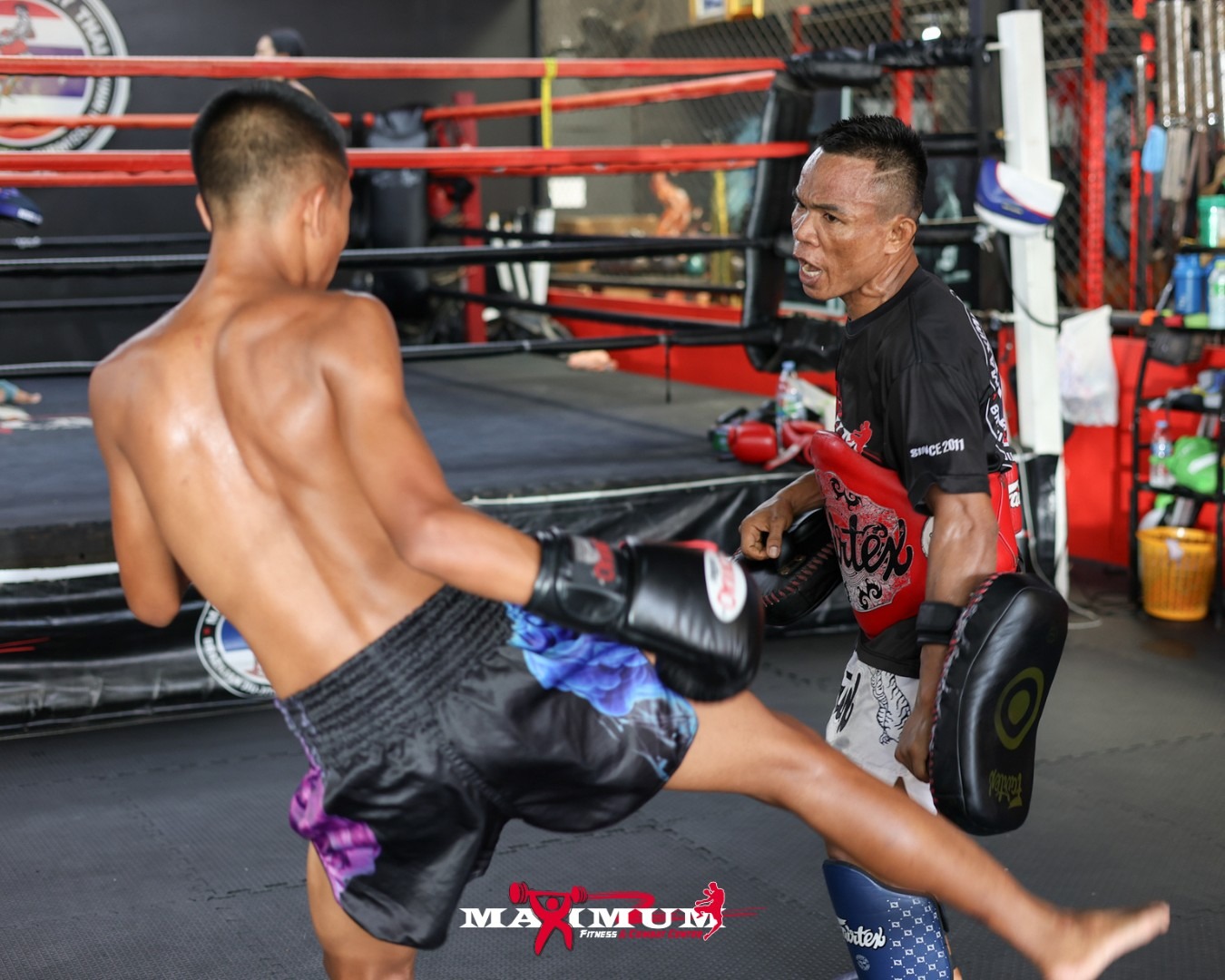
You can absolutely book a 1 month Muay Thai camp in Thailand as a total beginner, by the way. You do not need to arrive fit, flexible, or able to throw a kick. The camps are built for exactly this. Expect to train twice a day if you want to, eat like a horse, sleep like the dead, and leave fitter and sharper than you've been in years.
Here's the honest version of what that month looks like, what it tends to cost in 2026, and how to sort the visa and the booking without turning it into a research project.
What a month actually gets you
Two weeks teaches your body to hurt. A month teaches it to adapt.
That's the real difference. In the first week, everything is new and everything aches — the top of your foot from kicking the bag wrong, your shins, your hip flexors, muscles you didn't know clinching used. Around day eight to ten, something clicks. The soreness stops being constant. You start recovering between sessions instead of just accumulating damage. That's the window where two-weekers are packing to leave and you're just getting started.
By the end of a month you'll typically have:
- A clean, repeatable teep and roundhouse that don't collapse under fatigue. Not fighter-level — but real technique your body remembers.
- Noticeably better conditioning. Twice-a-day training in the heat is a brutal, effective engine-builder.
- A feel for clinch, which is the part almost everyone underestimates and the part that separates people who "did Muay Thai" from people who actually trained it.
- Real weight change if that's a goal — though I'd never promise a number, because it depends entirely on you, your food, and your starting point. Two daily sessions in 33°C does tend to do things, but bodies vary and I won't pretend otherwise.
- Enough repetition that pad rounds start to feel like a conversation with your trainer rather than a test you're failing.
If you've trained before, a month is where you stop maintaining and start genuinely levelling up — sharper timing, better defense, a heavier kick. If you're brand new, it's the difference between a holiday-with-punching and an actual foundation you can build on back home.
Not sure whether a month is right, or whether two weeks would do? We wrote an honest breakdown of exactly that trade-off — is two weeks of Muay Thai in Thailand enough — worth a read if you're on the fence about the length.
Training-only vs all-inclusive: which to book
This is the first real decision, and it matters more than which island you pick.
Training-only (roughly our Bronze tier) means you pay for the training and sort your own bed and food. You rent a room or an apartment nearby, eat at the local shops, and roll into the gym for sessions. It's cheaper, it gives you total freedom, and if you're the type who likes a bit of independence and doesn't mind logistics, it's brilliant. The catch: you're the one hunting for accommodation, figuring out laundry, and cooking or finding food twice a day while also being exhausted from training.
All-inclusive (our Silver and Gold tiers, where stay is bundled in) means accommodation, and often food, come packaged with the training. You land, you check in, you train. No apartment hunting, no wondering whether the room near the gym is a scam, no working out where breakfast comes from at 6:30am before a session. For a first trip especially, I think this is worth the premium — you've got enough new things to deal with without also becoming a part-time property scout.
My blunt take: if it's your first month in Thailand, book all-inclusive. Independence is romantic right up until you're jet-lagged, sore, and trying to translate a rental contract. Save the training-only route for trip number two, when you know the area and the rhythm. If you want to see how the packaged options compare, we keep a running rundown of the best all-inclusive Muay Thai camps in Thailand.
What a month costs in 2026 (hedged, because prices move)
I'm going to be careful here, because a live booking site that quotes fake prices deserves to go out of business. Prices shift with season, camp, room type and package — so treat everything below as an indicative 2026 range, not a quote, and check the live listing or trip builder for what's actually being charged today.
Roughly, for a full month:
- Training-only at a solid camp tends to land in the lower band — you're paying for coaching and mat time, then covering your own room and food on top. Budget accommodation and eating local keeps this genuinely affordable by Western standards.
- All-inclusive (training + accommodation, sometimes food) sits higher because the room's in the price and the convenience is real. The nicer the room and the more that's bundled, the more it costs — a fan room over a shared area is a very different number from a private air-con studio.
- On top of the package, budget for flights, travel insurance (non-negotiable — you're doing a combat sport), a visa if you go the DTV route, hand wraps and gloves if you don't bring your own, and the daily bits: smoothies, laundry, the occasional massage your legs will beg for.
The honest headline: a month of Muay Thai in Thailand is one of the best-value fitness experiences on earth, but "cheap" depends heavily on your accommodation choice and how you eat. Prices vary by camp, season and package — always check the current listing for live pricing rather than trusting a number you read in some blog from three years ago.
The visa bit: 30-day visa-exempt vs the DTV
For a one-month trip, most visitors from eligible countries can simply enter Thailand visa-exempt for 30 days — no application, no fee, you get stamped in on arrival. For a month of training, that's usually all you need, provided you leave on time. Overstaying is a genuinely bad idea; don't do it.
The wrinkle: a month can quietly become five weeks. Flights get moved, you fall in love with the place, your body wants two more weeks of clinch. If there's any chance you'll stretch beyond 30 days — or you already suspect one month won't be enough — look at the DTV (Destination Thailand Visa). It's the longer-stay visa built partly with soft-power activities like Muay Thai training in mind, and it changes the maths entirely for anyone thinking about a longer run.
I won't quote you exact fees or promise you'll qualify, because eligibility and costs depend on your nationality and your paperwork, and those things change. Check the official Thai government / embassy sources for the current rules, and we've written up how it works specifically for training in our DTV visa for Muay Thai guide. If a month is firmly a month, visa-exempt entry is almost certainly your answer. If it might grow, read about the DTV before you fly, not after.
A realistic week (including the part nobody photographs: recovery)
Here's roughly how a training month tends to shape up. Camps differ, so treat this as the rhythm, not a fixed timetable.
Morning session — early, often kicking off around 7 or 8am, sometimes with a run first. Warm-up, technique, bag work, pads, occasional sparring or clinch. Two to two-and-a-half hours in rising heat.
The middle of the day — you eat, and then you disappear. This is not lazy; it's the job. You nap, you lie under a fan, you let your body absorb the morning. Skip this and you'll fall apart by week two.
Afternoon session — usually the bigger, harder one, starting mid-to-late afternoon as it cools slightly. More clinch, more sparring, more conditioning. This is where the real work happens and where you'll feel yourself improving week to week.
Rest days matter more than heroics. Most camps run five to six days a week and take Sunday off. Take the day off. Genuinely. The people who train through every rest day are the people who get injured or overtrained and lose a week anyway. A month is a marathon — protect it.
A sensible month looks like: ease in during week one (maybe one session a day while your shins toughen), ramp to twice-daily through weeks two and three, then manage yourself in week four so you leave strong instead of broken. Listen to your trainer. They've watched a thousand foreigners arrive too hot and burn out by Friday.
Straight talk, from the ground
Here's what I'd actually tell a mate who asked.
The heat is the thing nobody prepares for. Not the training — the heat. Your first few sessions you'll feel like you've never been fit in your life, gasping through rounds that a local kid does smiling. That's normal. Give it a week. Your body recalibrates and suddenly the pace that broke you becomes the pace you keep.
Do not buy the hardcore-fighter fantasy for your first trip. There are camps built for people prepping to fight, all 5am runs and relentless volume, and they are magnificent — for someone else. If it's your first month and you walk into one of those expecting a fun fitness holiday, you'll be miserable and probably hurt. Match the camp to who you actually are, not who you'd like to be by the end. That's the entire reason our finder exists.
The clinch will humble you. Everyone arrives obsessed with kicks and comes home realising clinch is where the real game is. Lean into it early.
And the intangible bit: a month is long enough for the place to get into you. The 6am roosters you curse in week one become the alarm you don't mind. The smell of Tiger Balm and the sound of skipping ropes on concrete become the texture of your day. You come back not just fitter but weirdly recalibrated — like you remembered you have a body and it's good at things. That part I can't put a price on, and I won't pretend to.
One honest caveat I'll stand behind: results depend on you. The gym gives you two great sessions a day. What you do with the other twenty-two hours — how you eat, sleep, hydrate and recover — decides whether you come home transformed or just tired. Nobody can promise you a six-pack or a specific number on the scale. Anyone who does is selling something.
How to actually book it
The messy part is choosing, not booking. There are a lot of camps, they all look great in photos, and it's genuinely hard to tell from the outside which one fits a nervous beginner versus a returning amateur.
That's what the trip builder is for — you tell it your level, your goal, how long you're coming and where you fancy, and it matches you to vetted partner camps instead of leaving you to guess. Every camp we list, we've vetted. Booking is instant, prices show in your own currency, and you pick the tier that fits — training-only Bronze, or a stay-included Silver or Gold if you'd rather just land and train.
So: pick your length (a month is a great one), decide training-only versus all-inclusive (all-inclusive if it's your first), sort the visa (exempt for 30 days, or the DTV if it might grow), and let the finder narrow the camps for you. Then go. Your shins will hate you for a week and thank you for a lifetime.
Ready to see which camps actually fit you? Build your trip and get matched — it takes a couple of minutes and beats a fortnight of doom-scrolling gym Instagrams.